Women In Cartoons
Women in Cartoons

INTRODUCTION
The Cambridge Dictionary describes patriarchy as a “society in which the oldest male is the leader of the family or a society controlled by men in which they use their power to their own advantage.” In other words, Patriarchy is the hegemony ideology that men are in charge and are stronger than women. These hegemony patriarchal beliefs can be seen throughout all forms of media. In this post, I would like to focus specifically on cartoons.
PATRIARCHY IN CARTOONS
Cartoon animation has evolved for centuries and is a major part of mainstream media today influencing people of all ages. When people tend to think of patriarchal ideas they tend to overlook feminist stereotypes such as these examples below;
Betty Boop- iconic early 1900s female cartoon character created by Max and Dave Flesher. Often known for her petite and pretty looks. Although I have never seen any of Betty Boop’s cartoons her imagery has continued to be used across several platforms of media and art. Betty is known to represent beauty and is a great example of how the majority of people view women.

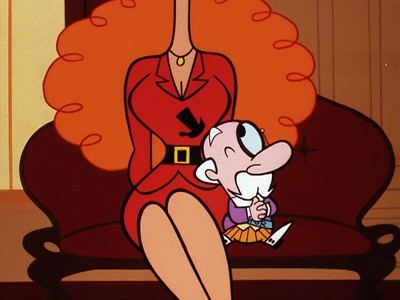
Sara Bellum- famous female cartoon character created in 1998 by Craig McCracken debuting in the hit show Power Puff Girls. Sara’s face was rarely shown in the show and she was known for her smarts and gorgeous looks. In the cartoon, Sara makes several smart remarks or solutions to assist her husband "The Mayor". However, the Mayor would often disregard Sara’s ideas and continue to make foolish decisions anyway. According to the excerpt “Beauty and the Patriarchal Beast…” This idea of good-looking smart women being with unattractive or foolish men is often seen in other forms of media such as sitcoms. Additionally, both Betty Boop and Sara Bellum share a lot of resemblance to the highly sexualized cartoon character Jessica Rabbit from "Roger Rabbit". This shows how media, emphasizes hegemony ideologies that women must be beautiful to be empowered.
FEMINISM IN CARTOONS
According to author Sell Snow “Feminist perspectives focus on the taken for granted as “normal” roles and rules for men and women in society”. In other words, the feminist perspective questions or challenges the patriarchy/hegemony beliefs that men are more masculine than women and that they should be in charge. Some examples of this can be seen in these cartoon characters;
Lila Test- the female protagonist in the cartoon Johnny Test made in the early 2000s. Lila is known to be a workaholic and provides for the Johnny Test household. While Lila’s husband Hugh is a househusband. Hugh does not work to provide for his family but rather stays home and focuses on cooking and cleaning. In fact, there was one episode in particular that Lila stopped working and Hugh had to get a job. At the end of the episode, Hugh loses his job and begs Lilia to work again and she does, restoring the TV show's status quo. One ongoing joke in the show is that Hugh can not cook well but everyone eats his meatloaf to make him feel fulfilled.
Susan & Mary Test- are female cartoon characters from the show Johnny Test. Similar to their mother Lila the Test sisters challenge hegemony views. The Test sisters are known for their intellect. Throughout the series, the Test sisters create several inventions for the FBI and other government officials. Oftentimes in the show, several male antagonists try to out-invent the two but they always always win.
CONCLUSION
With these examples in mind do you think that there has been an increase in feminist media, if so why or why not? Furthermore, what are some examples of patriarchy and/or feminism that you have observed in cartoons? If this post brought you insight or made you think of thought-provoking questions please respond down below. Additionally, I have attached a cited/referenced source list below if you are interested in any of the cartoon characters or information that I used for this post.
REFERENCED/ CITED SOURCES
Module 4 Sellsnow on "Feminist Perspectives"
Module 4 "Beauty in the Patrichary Beast..."

_title_card.jpg)

Comments
Post a Comment